
Table of Contents
Homicide and Its Legal Implications in Nepal
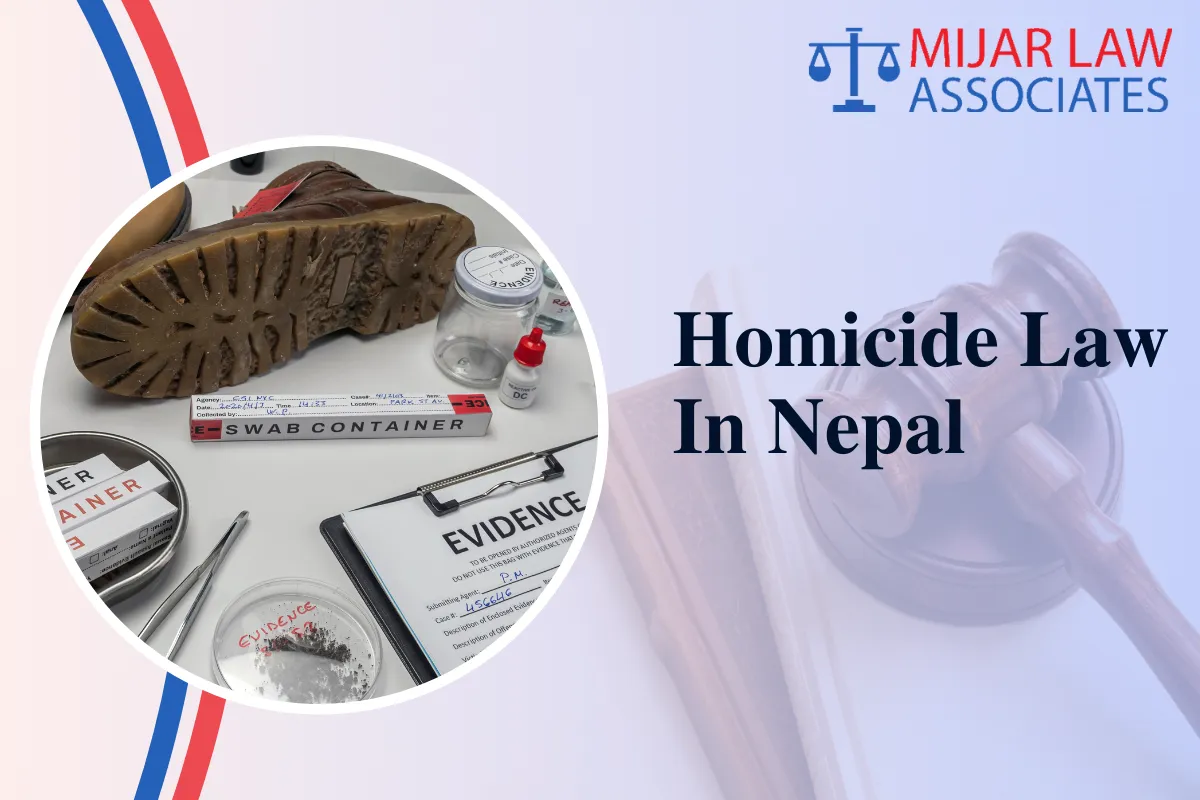
Homicide, often synonymous with murder, refers to the unlawful act of one individual causing the death of another. It represents one of the gravest criminal offenses in any legal system. The term covers a broad spectrum—from deliberate, preplanned killings to unintended deaths resulting from negligence or reckless actions. Legal classification of homicide typically considers factors such as intent, circumstances, and method of killing.
Murder, the most serious form of homicide, involves intentional killing with malicious intent and can be categorized further into:
- First-degree murder: Premeditated and planned.
- Second-degree murder: Intentional but unplanned.
Manslaughter is a lesser offense, involving unintentional killing often caused by sudden emotional disturbance or negligent behavior. Additionally, justifiable homicide refers to killings considered lawful, such as in cases of self-defense. Negligent homicide occurs when a person dies due to another's careless actions, without any intent to kill.
A thorough understanding of homicide includes examining motives, methods, and psychological factors, along with forensic evidence. This knowledge is essential for law enforcement, legal professionals, and criminologists in solving crimes and ensuring justice.
Homicide under Nepalese Law
Nepali law strictly prohibits the intentional or reckless causing of another person’s death. These offenses are addressed under Chapter 12 of the National Penal Code, 2074, which defines and categorizes various types of homicide:
1. Intentional Homicide
Knowingly causing another person's death through deliberate action.
Penalty: Life imprisonment.
2. Provocational Homicide
This occurs when a person, having lost self-control due to a sudden and intense provocation, causes someone’s death. However, certain situations are excluded from this defense, such as:
- When the provocation stems from lawful actions, self-defense, or official duties.
- When the offender intentionally provokes another, and the resulting reaction causes a death.
- Exceeding the limits of self-defense.
- Deaths occurring in the heat of passion following a sudden altercation.
Penalty: 10 to 15 years’ imprisonment and a fine ranging from NPR 100,000 to NPR 150,000.
3. Doctrine of Causation
Applies when someone commits an act intending or knowing it could result in death—not necessarily of the intended person.
Penalty: Based on whether the act qualifies as intentional or provocational homicide.
4. Reckless Homicide
Causing death through an act done with reckless disregard for safety.
Penalty: 3 to 10 years’ imprisonment and a fine between NPR 30,000 and NPR 100,000.
5. Negligent Homicide
Causing death due to negligent actions without intent to kill.
Penalty: Up to 3 years’ imprisonment and a fine up to NPR 30,000.
6. Attempt to Commit Homicide
Taking action with the intent to kill, even if the act does not result in death.
Penalty: Up to 10 years’ imprisonment and a fine up to NPR 100,000.
7. Abandonment of Vulnerable Persons
When a guardian or caregiver deserts or neglects individuals under their care, such as children, elderly persons, or those with disabilities, in a way that endangers their life or health.
Penalty: Up to 3 years’ imprisonment and a fine up to NPR 30,000.
8. Abetment of Suicide
It is unlawful to assist, incite, or create conditions that encourage another person to take their own life.
Penalty: Up to 5 years’ imprisonment and a fine up to NPR 50,000.
Homicide remains one of the most serious crimes addressed by both national and international legal frameworks. Nepal’s National Penal Code, 2074, classifies homicide based on intent and circumstance, ranging from premeditated murder to reckless or negligent actions, and imposes corresponding punishments that reflect the severity of each offense.
Additionally, laws against aiding suicide and abandoning those in need emphasize societal obligations to protect life and uphold human dignity. These legal measures not only serve to punish wrongdoers but also act as a deterrent against future violence. A comprehensive understanding of homicide laws is vital for promoting justice, safeguarding lives, and ensuring that perpetrators are held accountable under the law.
Disclaimer: This article is intended solely for informational purposes and should not be interpreted as legal advice, advertisement, solicitation, or personal communication from the firm or its members. Neither the firm nor its members assume any responsibility for actions taken based on the information contained herein.





-icon.webp)